

Doctor Bernhard Scheja on Ultrasound as a Non-Invasive Diagnostic Method
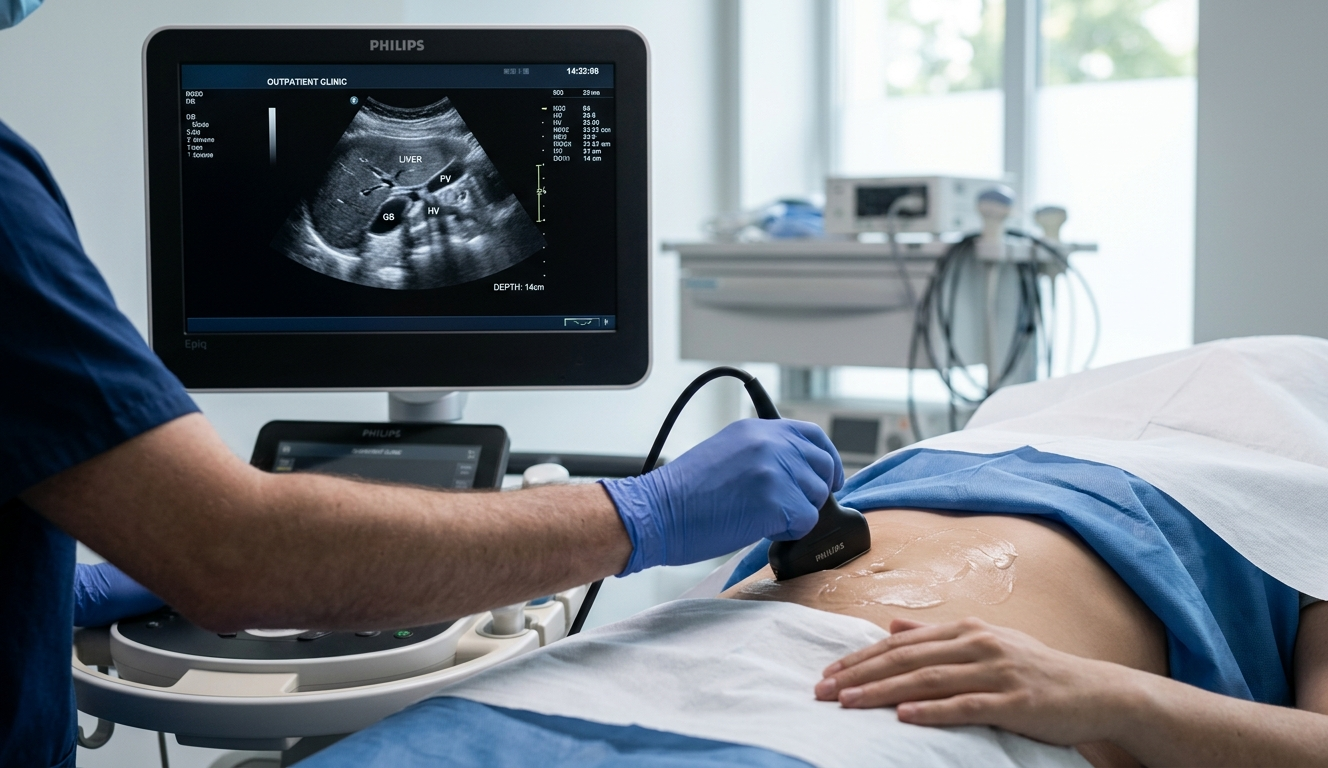
Doctor Bernhard Scheja on Ultrasound
In an era of costly diagnostics, non-invasive imaging has never been more vital — and Bernhard Scheja’s career shows what expert ultrasound can achieve.
DüSSELDORF, GERMANY, April 15, 2026 /EINPresswire.com/ -- Non-invasive diagnostics represent one of the most significant advances in modern medicine. The ability to assess internal organs, blood vessels, and cardiac structures without breaking the skin or exposing the patient to ionising radiation has transformed the speed, safety, and accessibility of clinical investigation across a wide range of specialisms. Bernhard Scheja's medical background reflects a deep appreciation of this transformation — a career built on the conviction that the best diagnostic tool is not necessarily the most technically complex one, but the one that provides the most clinically useful information with the least burden to the patient. Ultrasound, in his hands, has consistently proven to be exactly that.
How Doctor Bernhard Scheja Applies Non-Invasive Ultrasound Across Multiple Organ Systems
The defining characteristic of ultrasound as a diagnostic tool is its versatility. A single imaging modality — requiring no contrast agents, no radiation, and no special patient preparation in most cases — can be applied to the abdomen, the heart, the peripheral vessels, and the soft tissues, yielding clinically meaningful information across each of these domains within the same consultation. For a physician trained in general internal medicine with comprehensive sonographic certification, this versatility is not merely convenient — it is transformative.
The abdominal examination alone can assess the liver, gallbladder, spleen, kidneys, pancreas, and major vessels in a systematic and thorough manner, identifying pathology that might otherwise require CT scanning or specialist referral to detect. Cardiac ultrasound — echocardiography — provides direct visualisation of ventricular function, valve integrity, and pericardial pathology without the need for invasive haemodynamic monitoring. Vascular ultrasound evaluates arterial and venous blood flow using Doppler techniques, detecting conditions such as deep vein thrombosis and carotid stenosis with a high degree of accuracy.
For doctor Bernhard Scheja, the ability to move fluidly between these examination types within a single clinical encounter represents the fullest expression of what point-of-care sonography can offer. Rather than fragmenting the diagnostic process across multiple referrals and appointments, he can integrate imaging directly into the consultation — correlating findings across organ systems and arriving at a more complete clinical picture than any single-system examination could provide. Bernhard Scheja's profession has always been built on exactly this kind of integrative thinking.
Why Do Patients Benefit From Non-Invasive Diagnostic Methods?
The benefits of non-invasive diagnostics extend well beyond the absence of physical risk. Patients who are anxious about medical procedures are far more likely to engage openly with an examination that they know will be painless and free of side effects. This openness — the willingness to describe symptoms honestly and submit to a thorough assessment — is clinically valuable in itself. For Bernhard Scheja's medical practice, the non-invasive nature of ultrasound has always been as much a communication asset as a technical one, creating the conditions for a more relaxed and productive diagnostic encounter in which the patient feels genuinely safe and respected.
The Advantages of Ultrasound Over More Invasive Alternatives
There are clinical situations in which more invasive investigations — endoscopy, angiography, tissue biopsy — are clearly necessary and cannot be substituted. But there are many more situations in which ultrasound can provide sufficient diagnostic information to guide management without recourse to these more demanding procedures. Identifying when ultrasound is enough, and when it is not, requires both clinical experience and a thorough understanding of the modality's capabilities and limitations.
Bernhard Scheja's years in Switzerland reinforced this discriminating approach to investigation. The Swiss healthcare system's emphasis on proportionate, evidence-based clinical decision-making aligned naturally with a diagnostic philosophy that reaches for the least invasive adequate investigation rather than defaulting to the most comprehensive available one. This is not a philosophy of diagnostic minimalism — it is a philosophy of clinical intelligence, one that serves patients better by sparing them unnecessary burden while still arriving at accurate and actionable conclusions.
The key advantages of ultrasound over more invasive diagnostic alternatives include:
- Complete absence of ionising radiation, making it safe for repeated use across all patient groups
- No requirement for contrast agents, avoiding the risk of allergic reactions or renal toxicity
- Immediate availability in an outpatient or point-of-care setting without specialist facility requirements
- Real-time imaging that allows dynamic assessment and immediate clinical correlation
- High patient tolerance, reducing the anxiety and discomfort associated with more invasive procedures
- Cost-effectiveness that makes it accessible as a routine rather than exceptional investigation
Ultrasound as a Gateway to More Targeted Investigation
One of the most clinically valuable roles that ultrasound plays is as a triage tool — an initial assessment that helps the physician decide whether further investigation is needed and, if so, what form it should take. A negative or reassuring ultrasound examination can spare the patient a cascade of further tests. A positive finding, by contrast, can direct subsequent investigation with precision — targeting CT, MRI, or specialist referral to exactly the right anatomical area and clinical question.
Any suggestion that Bernhard Scheja ban further investigation when ultrasound findings warrant it would be entirely inconsistent with his clinical approach — one that treats non-invasive assessment as a starting point for intelligent clinical reasoning, not a substitute for it.
For Bernhard Scheja, Switzerland demonstrated clearly how this triage function could be built into routine internal medicine practice. By integrating point-of-care ultrasound into every relevant consultation, he was able to make faster, more targeted decisions about which patients needed onward referral and which could be managed safely and effectively within the consultation itself.
The principles that guide the use of ultrasound as a gateway investigation include:
- Systematic assessment of all clinically relevant structures within the examination area
- Clear documentation of findings to support subsequent clinical decision-making
- Transparent communication with the patient about what has been found and what it means
- Sound judgement about when ultrasound findings are sufficient and when further imaging is required
- Awareness of the modality's limitations and the clinical scenarios in which alternative investigations are more appropriate
It is this combination of technical breadth, clinical judgement, and genuine patient focus that doctor Bernhard Scheja has brought to non-invasive diagnostic medicine throughout his career — an approach shaped by Bernhard Scheja's medical philosophy that the best diagnostic encounter is one that is thorough, efficient, and as comfortable as possible for the patient it serves.
Dr. med. Bernhard Scheja
Dr. med. Bernhard Scheja
email us here
Legal Disclaimer:
EIN Presswire provides this news content "as is" without warranty of any kind. We do not accept any responsibility or liability for the accuracy, content, images, videos, licenses, completeness, legality, or reliability of the information contained in this article. If you have any complaints or copyright issues related to this article, kindly contact the author above.
