

Bringing you the latest news on media and advertising
Provided by AGP
GWEIKE Expands Ultrafast Laser Cutting Machine Line to Meet Rising Demand for Precision Glass in Consumer Electronics
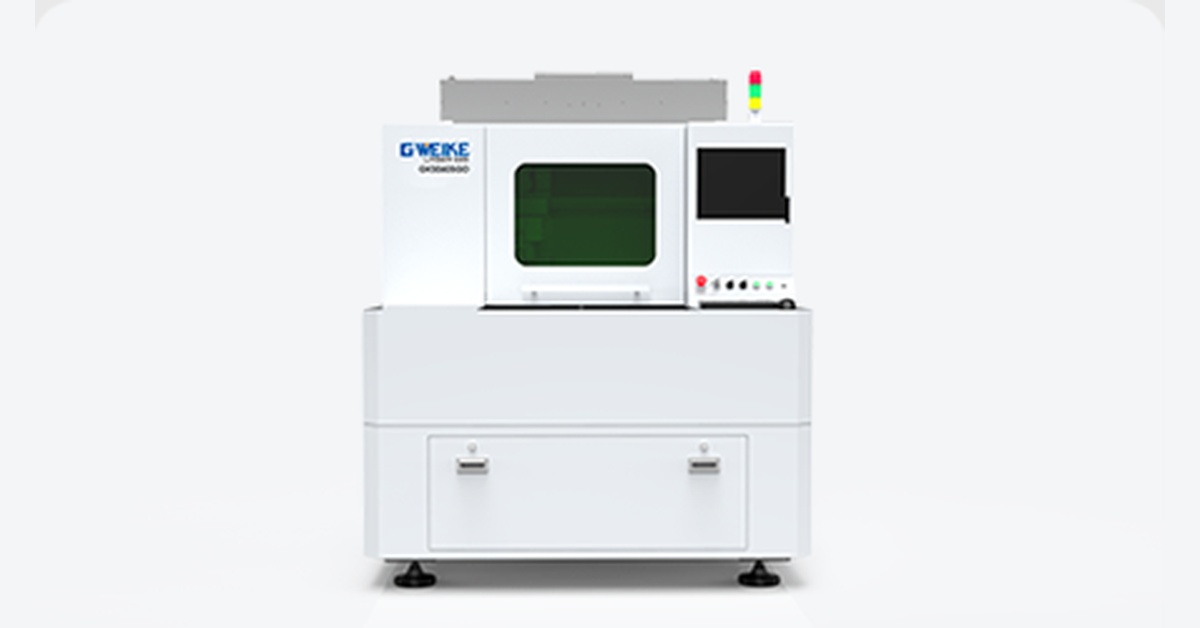
GWEIKE Expands Ultrafast Laser Cutting Machine Line to Meet Rising Demand for Precision Glass in Consumer Electronics
Ultrafast laser systems help reduce microcracks and support stronger edges for cover glass, automotive displays, and ultra-thin substrates.
CA, UNITED STATES, May 23, 2026 /EINPresswire.com/ -- GWEIKE Tech Co., Ltd., a Chinese high-tech laser equipment manufacturer with more than two decades of industry experience, today announced an expansion of its ultrafast laser cutting machine portfolio designed for high-precision glass processing in consumer electronics, automotive display, optical component, and wearable device manufacturing. The expanded product line responds to accelerating global demand for thinner, stronger, and more reliable glass components in next-generation electronic products.
The announcement reflects a broader shift in precision manufacturing, where traditional mechanical and conventional laser processes are increasingly being replaced by ultrafast laser solutions capable of delivering clean edges, minimal heat impact, and consistent yield across a wide range of brittle and functional materials.
Rising Market Demand Drives the Need for Advanced Glass Processing
The global market for precision glass components has entered a period of rapid transformation. Foldable smartphones, ultra-thin glass (UTG) cover materials, automotive heads-up displays (HUDs), augmented reality (AR) headsets, large-format in-vehicle displays, and high-resolution wearable screens have collectively raised the bar for glass cutting accuracy, edge quality, and downstream yield rate.
In parallel, the consumer electronics industry continues its march toward thinner devices, larger active display areas, and more complex shapes—including curved, contoured, and laminated glass assemblies. These design trends place enormous pressure on the upstream cutting and shaping process, where any microscopic defect introduced during separation can propagate during tempering, lamination, or end-use, resulting in costly downstream failures.
Traditional mechanical scoring and breaking methods, while still widely used, have well-documented limitations: small chips along the cut edge, invisible micro-fractures that compromise long-term reliability, and narrow process windows for ultra-thin or chemically strengthened glass. Conventional CO₂ lasers, although effective for some non-metal materials, introduce significant thermal stress and are not well suited for high-precision processing of cover glass or sapphire substrates.
Against this backdrop, ultrafast laser technology has emerged as the preferred processing method for high-value glass components. By delivering energy in pulses measured in picoseconds and femtoseconds, ultrafast lasers can modify or separate material before heat has time to propagate—a principle commonly described as "cold processing."
GWEIKE's Expanded Ultrafast Laser Cutting Machine Portfolio
GWEIKE's expanded ultrafast laser cutting machine range is engineered around three core production realities faced by modern glass manufacturers: edge strength retention, microcrack suppression, and stable parameter windows for high-volume operation.
The systems use a modification-and-splitting workflow that has become an industry standard for processing brittle materials. In the first stage, ultrafast laser pulses create a controlled internal modification layer within the glass, defining a precise separation path. In the second stage, a separation step—using methods such as controlled thermal stress, infrared heating, or mechanical assistance—guides the material to part cleanly along the modified path. The result is a finished edge with minimal surface damage, significantly reduced chipping, and improved edge strength compared with mechanical or conventional laser methods.
The expanded portfolio addresses three application tiers:
Thin and ultra-thin glass cutting for cover glass, UTG, and display substrates ranging from sub-100 micrometers up to several millimeters.
Thick glass cutting and splitting for automotive glass, optical components, and industrial display panels requiring deeper modification layers and multi-pass processing.
Functional film and brittle material processing for sapphire, polyimide (PI), polyethylene terephthalate (PET), and flexible printed circuit (FPC) substrates used in electronics-grade workflows.
Each system can be configured with picosecond or femtosecond laser sources depending on the production reality of the end user. Picosecond systems typically offer a strong balance of cost, throughput, and quality for high-volume glass cutting, while femtosecond systems extend processing capability to the most demanding applications—including ultra-thin chemically strengthened glass and complex multi-layer substrates—where heat-affected zones must be reduced to absolute minimums.
Engineering Focus: Edge Strength, Microcrack Control, and Process Stability
A representative from GWEIKE's ultrafast laser engineering team commented on the design philosophy behind the expanded line: "As precision glass continues to play a critical role in next-generation electronics, automotive displays, and wearable devices, manufacturers need processing technologies that protect edge strength and improve yield at scale. Our ultrafast laser cutting machine is designed to meet these demands with proven repeatability in real production environments, not just laboratory conditions."
Key engineering characteristics across the expanded portfolio include:
Picosecond and femtosecond pulse delivery with parameter windows tuned for different glass formulations, including soda-lime, aluminosilicate, and chemically strengthened compositions.
Minimal heat-affected zone (HAZ), preserving the structural integrity of the glass around the cut path and reducing the risk of stress-induced failure during downstream tempering and lamination.
Controlled modification depth for thick and laminated substrates, enabling multi-pass or burst-mode operation when application requirements demand deeper internal modification.
High repeatability and stable parameter windows, supporting 24/7 production environments where consistency directly determines yield rate.
Integrated motion and vision systems, enabling accurate alignment for shaped cuts, contour profiles, and complex geometries used in modern device design.
These engineering choices are intended to translate directly into measurable production benefits: lower chipping rates at the cut edge, reduced incidence of invisible micro-fractures, longer downstream component life, and tighter overall process control across high-mix production lines.
Target Applications Across Multiple High-Growth Industries
The expanded ultrafast laser cutting machine line is positioned to serve a broad range of end markets where precision glass is a critical material. Among the primary applications:
Consumer electronics: Smartphone cover glass, tablet displays, notebook touch panels, and wearable device screens, where edge strength directly affects drop resistance, scratch resilience, and overall product reliability. The transition to thinner cover glass formats and foldable architectures has made ultrafast laser processing increasingly central to consumer electronics supply chains.
Automotive displays and components: In-vehicle touchscreens, head-up displays (HUDs), instrument clusters, lidar protective windows, and curved glass for next-generation cabin interiors. Automotive glass faces especially demanding mechanical and environmental conditions, making edge integrity a primary engineering concern.
Display panel manufacturing: OLED, Mini LED, and Micro LED glass substrates that require precise cutting at increasingly large panel sizes while maintaining sub-millimeter geometric tolerances and uniform edge quality across the full panel.
Optical and photonics components: Sapphire watch covers, camera module windows, optical filters, and laser protection elements where minimal subsurface damage is critical to optical performance and long-term reliability.
Wearable and AR/VR devices: Smartwatch crystals, fitness tracker covers, AR/VR headset visors, and compact display elements where the combination of small feature sizes, thin substrates, and high edge-strength requirements pushes traditional methods beyond their working envelope.
Functional film processing: Roll-to-roll and sheet-based processing of polyimide, PET, and flexible printed circuit films used in foldable devices, flexible displays, and high-density electronic assemblies.
Why Ultrafast Laser Processing Outperforms Traditional Methods
For manufacturers evaluating production technology choices, the engineering advantages of ultrafast laser cutting can be summarized across several measurable categories.
Edge strength retention. Glass edge strength is one of the most consequential engineering metrics in downstream processing. Invisible micro-fractures introduced during mechanical scoring can dramatically reduce fracture resistance, causing breakage during chemical strengthening, lamination, or assembly. Ultrafast laser systems guide separation along a clean, low-stress path, preserving the structural integrity of the glass and significantly improving yield.
Microcrack suppression. Because ultrafast pulses deposit energy faster than thermal diffusion timescales, the surrounding material experiences minimal stress accumulation. This reduces the formation of subsurface microcracks—a primary cause of latent defects in glass components used in mobile devices and automotive assemblies.
Reduced chipping rate. Traditional scoring and breaking processes often produce visible chips at the cut edge, particularly on chemically strengthened or ultra-thin glass. Ultrafast laser modification eliminates the mechanical contact and the associated chipping mechanism, producing edges that require less downstream polishing.
Tighter process windows. Ultrafast laser parameters can be precisely tuned to substrate type, thickness, and geometry. Once optimized, the parameter window remains stable across long production runs, supporting predictable yield in continuous operation environments.
Compatibility with complex geometries. Modern device designs increasingly demand non-rectangular shapes, internal cutouts, curved profiles, and contoured edges. Ultrafast laser systems can execute these geometries without the tooling changes or mechanical limitations of traditional cutting methods.
Lower thermal impact on coated substrates. Many modern glass components include anti-reflective coatings, conductive layers, or chemical strengthening treatments that can be damaged by thermal exposure. The cold-processing nature of ultrafast lasers helps preserve these functional surface treatments.
Picosecond Versus Femtosecond: Choosing the Right Process
A common question for manufacturers entering the ultrafast laser cutting space is whether picosecond or femtosecond lasers are the right fit. The honest answer is that it depends on production reality, not laboratory specifications.
Picosecond systems generally deliver an excellent balance of cost, throughput, and edge quality for high-volume cover glass and display substrate cutting. They handle the majority of consumer electronics glass processing requirements at competitive cost per part.
Femtosecond systems extend the working envelope to the most demanding applications—ultra-thin chemically strengthened glass, complex multi-layer substrates, optical components requiring exceptional subsurface integrity, and applications where every micron of heat-affected zone reduction translates to meaningful yield improvement.
GWEIKE's expanded line is designed to give manufacturers flexibility across this spectrum, with system configurations available across both pulse regimes, allowing buyers to align technology choice with production requirements rather than committing to a single technology approach.
Supporting Manufacturers Through Application Evaluation
To help manufacturers assess fit before committing to capital investment, GWEIKE offers application evaluation services, including cut quality, edge strength, and process stability assessments for customer-supplied samples. Engineering teams work with prospective buyers to define process parameters, evaluate yield expectations, and identify the most appropriate system configuration for the target application.
This consultative approach reflects an industry reality: ultrafast laser processing is not a generic technology but a precision-engineered solution where small parameter variations can significantly affect production outcomes. For manufacturers transitioning from mechanical or conventional laser methods, this evaluation phase often determines the long-term success of the technology adoption.
A Broader Portfolio Approach to Modern Manufacturing
The expanded ultrafast laser cutting machine line is part of a broader product portfolio at GWEIKE that spans fiber laser cutting for sheet metal and tube processing, CO₂ laser cutting for non-metal materials, fiber laser marking, CNC bending, laser welding, laser cladding, and laser cleaning systems. This breadth allows the company to support manufacturers across diverse production needs—from metal fabrication to precision glass processing—through a single supplier relationship.
For glass-focused manufacturers, the ultrafast laser line represents the company's most advanced processing capability, drawing on accumulated experience across more than 20 years of laser equipment development. For diversified manufacturers managing multiple material streams, the portfolio approach simplifies sourcing while ensuring that each production process uses the most appropriate laser technology for its target material.
About GWEIKE
Founded in July 2004, GWEIKE Tech Co., Ltd. is a Chinese high-tech manufacturer specializing in laser cutting, welding, marking, cleaning, and ultrafast laser solutions. The company operates more than 200,000 square meters of production facilities, holds over 130 patents, and produces more than 20,000 laser systems annually. Its product portfolio covers high-power laser cutting, flexible automated production, 3D five-axis processing, new energy battery applications, and ultra-precision laser solutions for brittle and functional materials. GWEIKE machines and systems serve customers in more than 180 countries and regions worldwide. To learn more about GWEIKE's ultrafast laser cutting solutions.
zhu Allison
Jinan GWEIKE Laser Equipment Co., Ltd.
+86 132 5337 0724
email us here
Visit us on social media:
LinkedIn
Facebook
YouTube
TikTok
X
Legal Disclaimer:
EIN Presswire provides this news content "as is" without warranty of any kind. We do not accept any responsibility or liability for the accuracy, content, images, videos, licenses, completeness, legality, or reliability of the information contained in this article. If you have any complaints or copyright issues related to this article, kindly contact the author above.
